
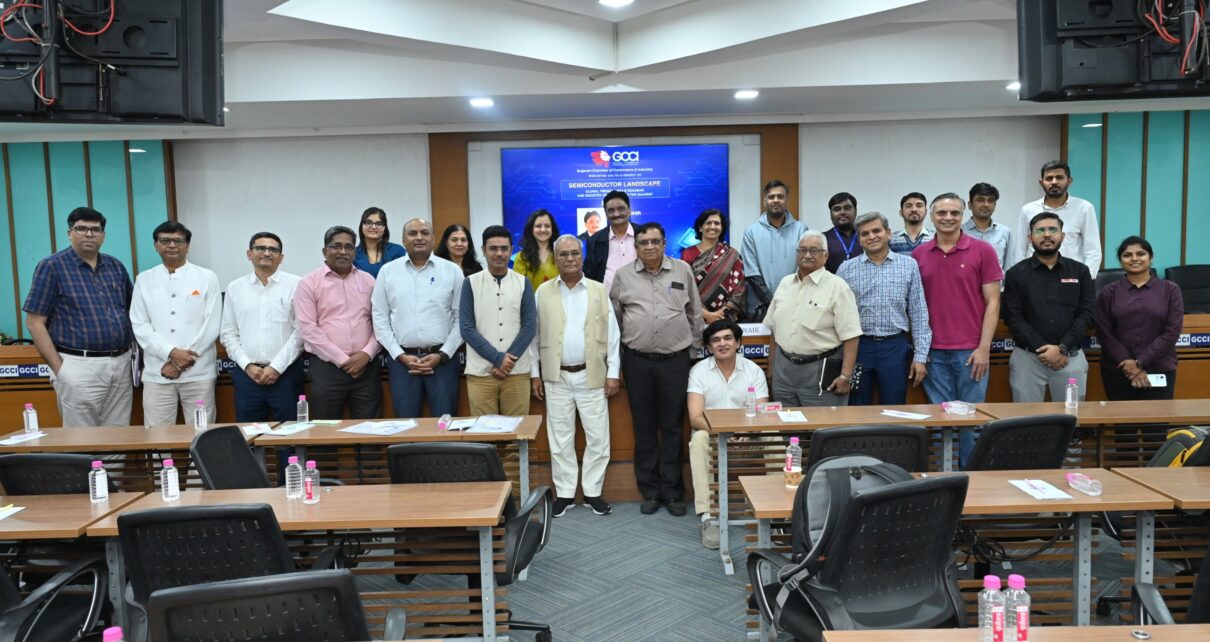
Gujarat Chamber of Commerce & Industry (GCCI) through their Education Committee organized a session on “Semiconductor Landscape: Global Trends, India’s Roadmap and Industry Opportunities for Gujarat” on Monday, 08th December 2025. The session aimed to provide industry stakeholders, academicians, and entrepreneurs with valuable insights into the rapidly evolving global semiconductor ecosystem and India’s strategic growth path in this sector.
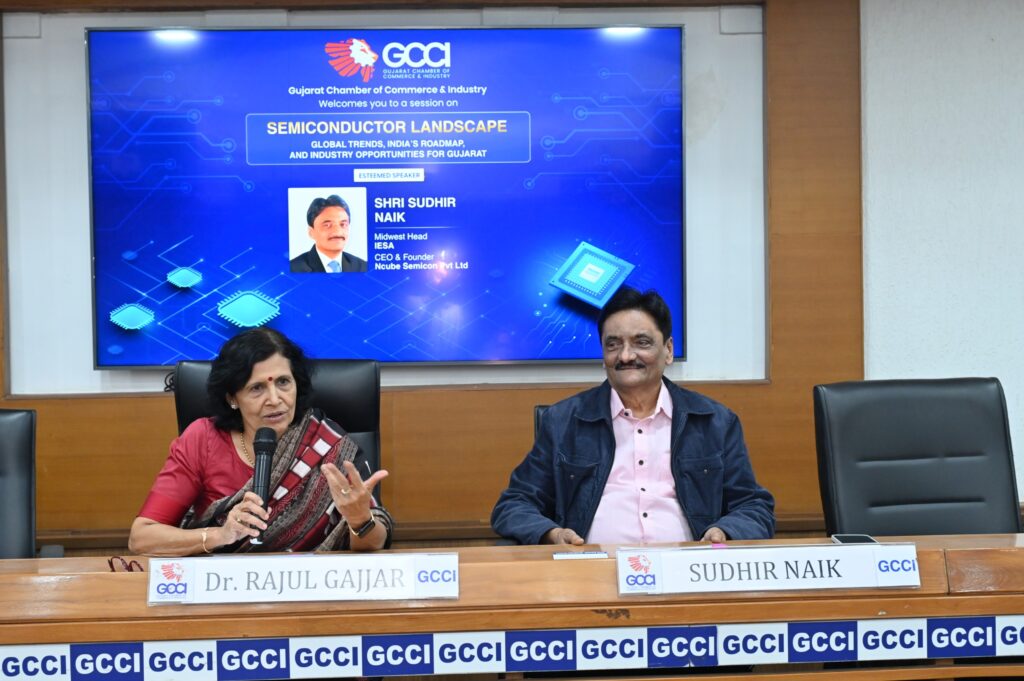
Welcoming the participants GCCI Education Committee Chairperson Dr. Rajul Gajjar underscored the importance of capacity building, structured skill development programs, and deeper industry–academia collaborations to develop a sustainable semiconductor talent pipeline.Shehighlighted the role of educational institutions in aligning curricula with emerging technologies and the need for multi-stakeholder partnerships to ensure India’s preparedness to meet the growing demand for trained semiconductor professionals.
In his Keynote Address, Shri Sudhir Naik, Midwest Head, IESA, and CEO & Founder, NcubeSemicon, outlined key global semiconductor trends and highlighted India’s rapidly advancing policy landscape aimed at building a self-reliant ecosystem. He noted that growth in AI technologies, rising demand for smart devices, and global supply-chain diversification are creating strong opportunities for emerging semiconductor hubs.
Shri Sudhir Naik emphasized that India’s semiconductor mission is supported by robust government initiatives—including design-linked incentives, advanced manufacturing support, talent development, and strengthened R&D frameworks—driving accelerated progress across the value chain.
He underscored Gujarat’s strategic strengths, citing its strong industrial infrastructure, growing innovation culture, and readiness in design, fabrication, assembly, testing, and advanced packaging. With proactive policies and rising industry participation, Gujarat is set to play a key role in India’s semiconductor growth.
Providing guidance to startups and MSMEs, Shri Naik stressed design-led innovation, IP creation, and collaboration with global leaders. He urged organizations to leverage emerging opportunities by investing in innovation, partnerships, and capability building across the semiconductor ecosystem.
Shri Sudhir Naik’s address provided clear strategic direction for industry stakeholders and reinforced India’s commitment to building a resilient and world-class semiconductor ecosystem.
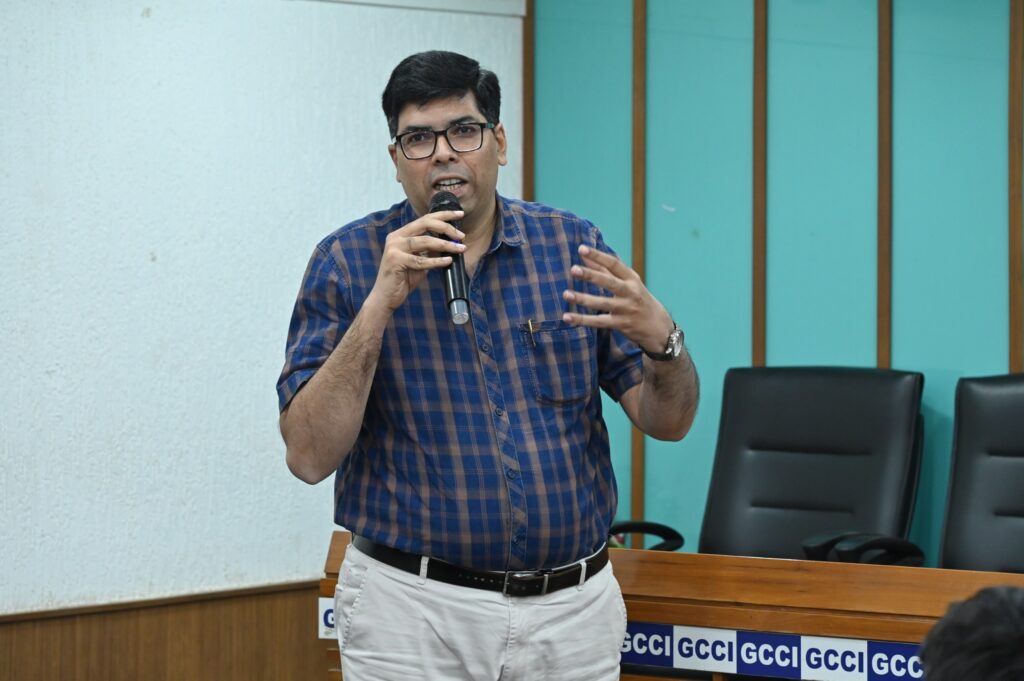
An interactive Q&A session allowed participants to engage directly with the speaker, addressing queries related to investment opportunities, skill development, and future industry trajectories.
The program concluded with a Vote of Thanks proposed by Dr. Keyur Darji, Member, GCCI Education Committee.