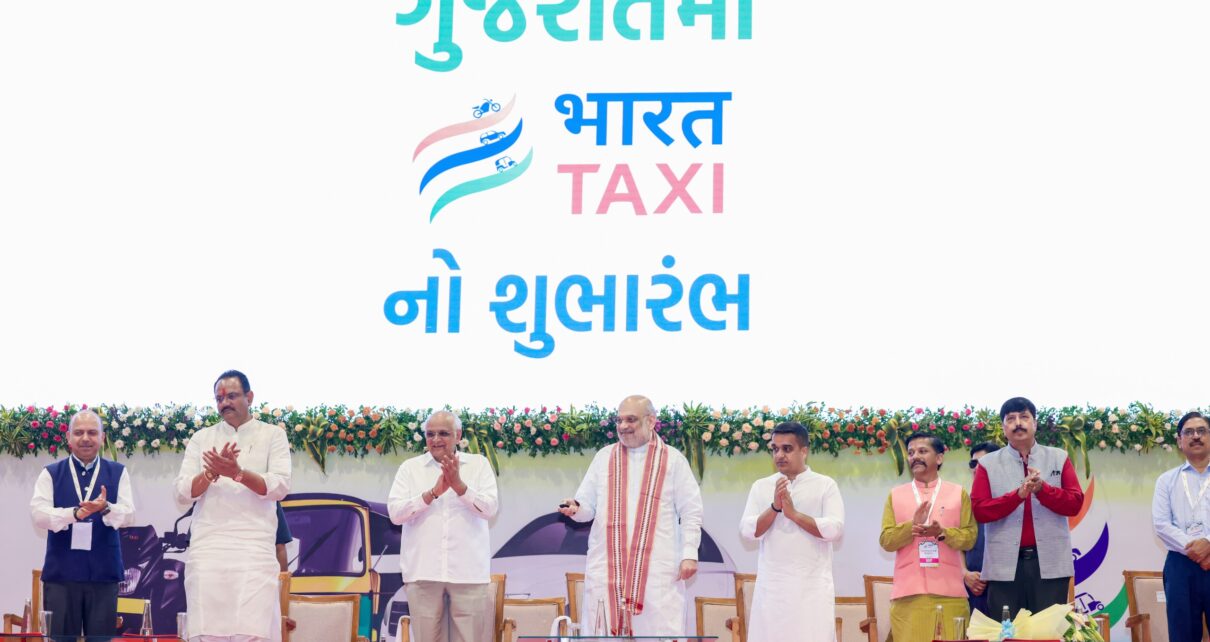
Gandhinagar, Gujarat: Union Home and Cooperation Minister Amit Shah today launched Bharat Taxi, a cooperative mobility platform, from Gandhinagar. The service has commenced operations across Gujarat’s major cities, including Ahmedabad, Surat, and Rajkot, offering two-wheelers, auto-rickshaws, and four-wheel taxi services.
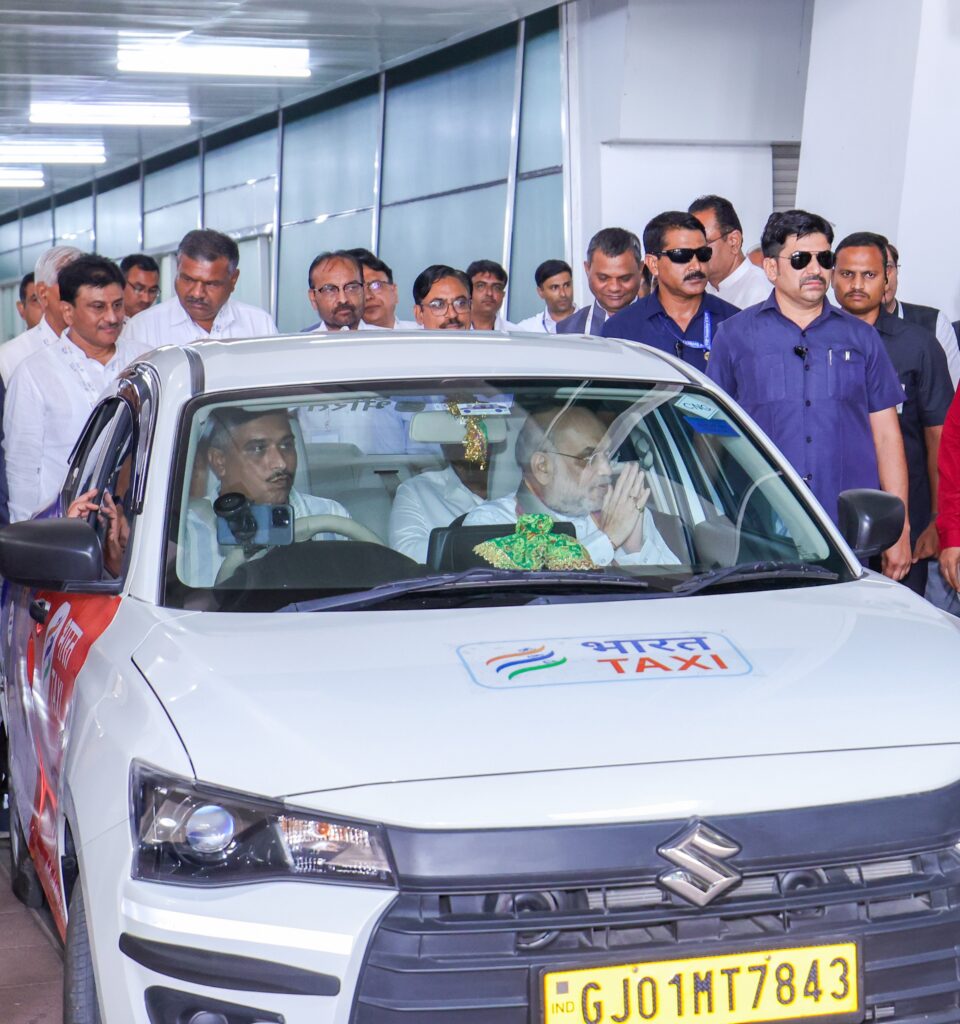
The initiative aims to transform India’s mobility sector by implementing Prime Minister Narendra Modi’s vision of “Prosperity through Cooperation” (Sahkar Se Samriddhi). Unlike conventional ride-hailing platforms, Bharat Taxi is designed as a driver-owned cooperative, where drivers are recognized as “Sarathis” (partners) rather than merely service providers.
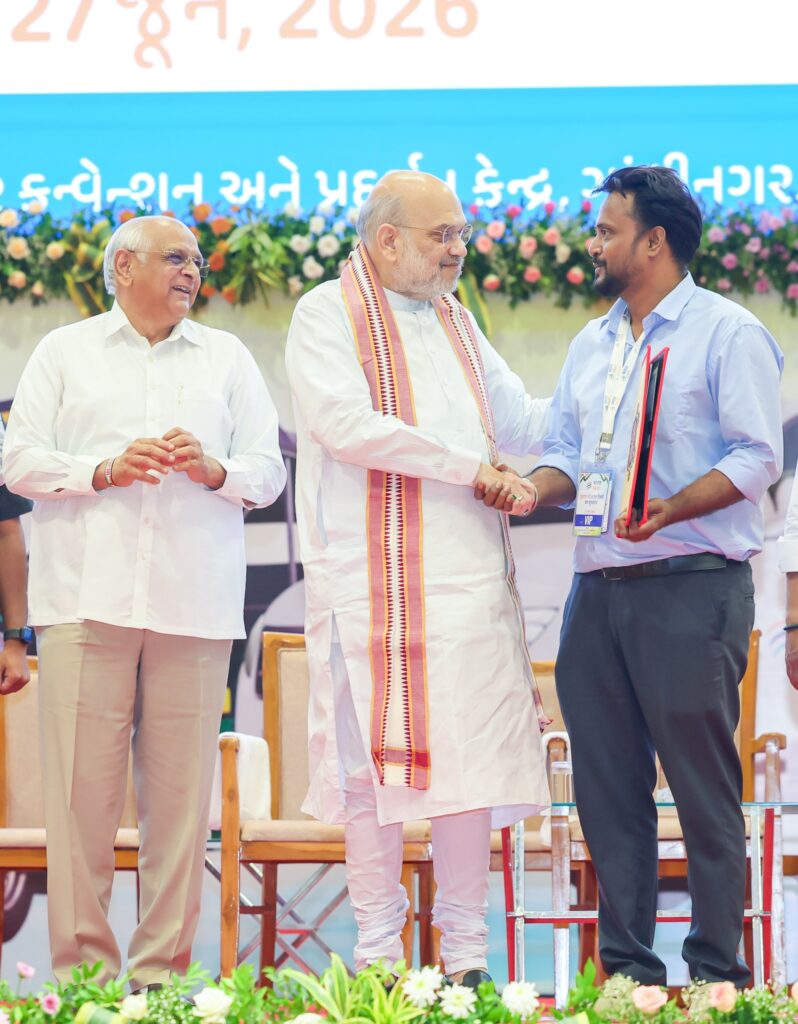
Key Highlights
- Bharat Taxi has already enrolled over 700,000 Sarathis (drivers) across the country.
- More than 3.7 million customers have already used the platform.
- Sarathis are shareholders and owners of the cooperative, not just drivers working for an app.
- The platform will provide ownership, dignity, financial security, insurance support, access to loans, and business expansion opportunities.
- Bharat Taxi aims to expand to more than 500 cities and towns within the next two years.
- Services will be operational in seven major Indian cities before July 31, 2026, including Nagpur, Pune, Mumbai, Lucknow, Chandigarh, Jaipur, and Kolkata.
Amit Shah: “Sarathi, Not Driver”
Addressing the gathering at Mahatma Mandir in Gandhinagar, Amit Shah said the distinction between a “driver” and a “Sarathi” reflects a completely different philosophy.
According to him:
- Private companies generally treat individuals merely as drivers.
- Bharat Taxi considers them partners, shareholders, and owners of the cooperative.
- The objective is to eliminate exploitation of both drivers and customers while ensuring transparent and fair mobility services.
Criticism of Existing Ride-Hailing Platforms
Amit Shah referred to complaints frequently raised against app-based taxi platforms, including:
- High commission deductions from drivers.
- Delayed payments.
- Suspension of driver accounts without proper hearings.
He said that while legislation has its role, a cooperative ownership model offers a more sustainable solution by aligning the interests of drivers with the platform itself.
Cooperative Model Inspired by Amul
Drawing parallels with India’s successful cooperative movement, Shah cited the example of Amul, saying that dairy farmers became stakeholders in one of the world’s largest food brands through cooperative ownership.
He also highlighted institutions such as IFFCO, KRIBHCO, NDDB, NABARD, NCDC, and NCEL, which have supported the Bharat Taxi initiative to create a transparent, driver-centric alternative to private mobility companies.
Response to Competitive Pricing
Responding to reports that competing platforms have temporarily reduced fares, Shah alleged that such measures are intended to slow Bharat Taxi’s growth.
He asserted that:
- Bharat Taxi would continue operating despite aggressive competition.
- The objective is not to eliminate competitors, but to establish a fair, transparent, and sustainable mobility ecosystem.
- Temporary fare reductions by rivals may not continue indefinitely, whereas Bharat Taxi is focused on long-term stability.
Expansion Plans
Bharat Taxi plans to:
- Expand to 500+ cities and towns within two years.
- Launch operations in seven major cities before July 31, 2026.
- Offer services across two-wheelers, auto-rickshaws, and four-wheel taxis nationwide.
Institutional Partnerships
During the launch event, Bharat Taxi exchanged Memorandums of Understanding (MoUs) with several organizations to strengthen its operational network, including:
- Gujarat Metro Rail Corporation (GMRC)
- Gujarat State Cooperative Bank
- Gujarat Traffic Police
- Ahmedabad Airport
- Airports Authority of India (Rajkot and Surat)
- Western Railway (Ahmedabad Division)
- Vadodara Airport
- Ahmedabad Municipal Corporation/BRTS
- Adani Airport
These partnerships are intended to improve integration with airports, metro systems, railway stations, urban transport, and traffic management infrastructure.
Event Dignitaries
The launch ceremony was attended by:
- Bhupendra Patel
- Harsh Sanghavi
- Jitu Vaghani
- Ramesh Katara
- Ashish Kumar Bhutani
- Manoj Das
- Jayen Mehta
along with senior cooperative leaders, government officials, and a large number of Sarathis.
Vision
According to Amit Shah, Bharat Taxi seeks to redefine India’s mobility sector by combining technology, cooperative ownership, and public service, ensuring that drivers receive respect, financial empowerment, social security, and long-term prosperity, while customers benefit from reliable and transparent transportation services.