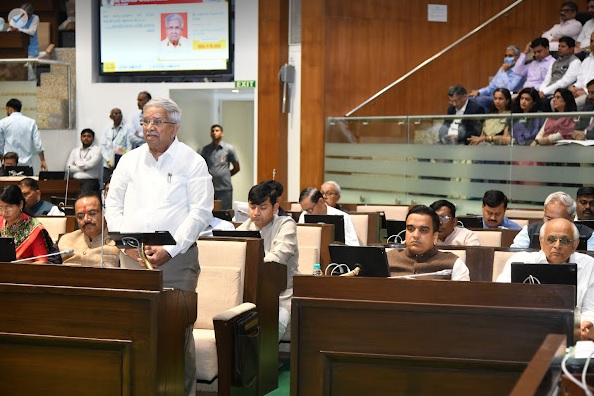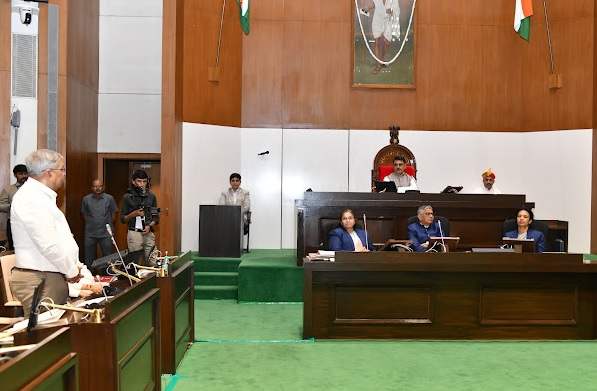
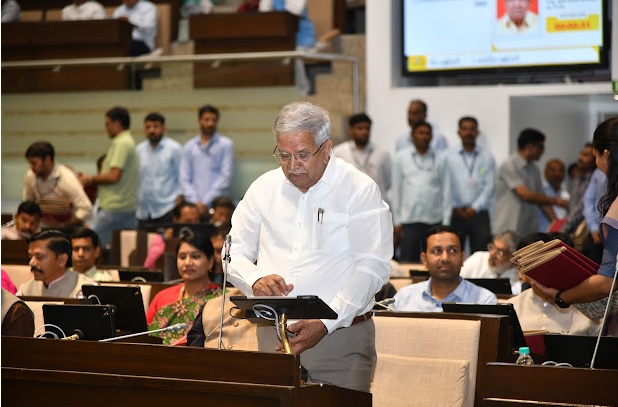
Gandhinagar, February 18, 2026: The Gujarat government on Wednesday unveiled the largest budget in the state’s history — a massive ₹4,08,053 crore budget for the financial year 2026-27 in the Gujarat Legislative Assembly. The budget session saw Finance Minister Kanu Desai present the state’s fiscal plan for the year ahead, marking his fifth consecutive budget presentation, a record in itself.
https://www.youtube.com/live/I0Xt6vmJqM0?si=-bkI-vMX4ND5R30V
WATCH VIDEO
https://www.instagram.com/p/DU4wuFpiHQk/
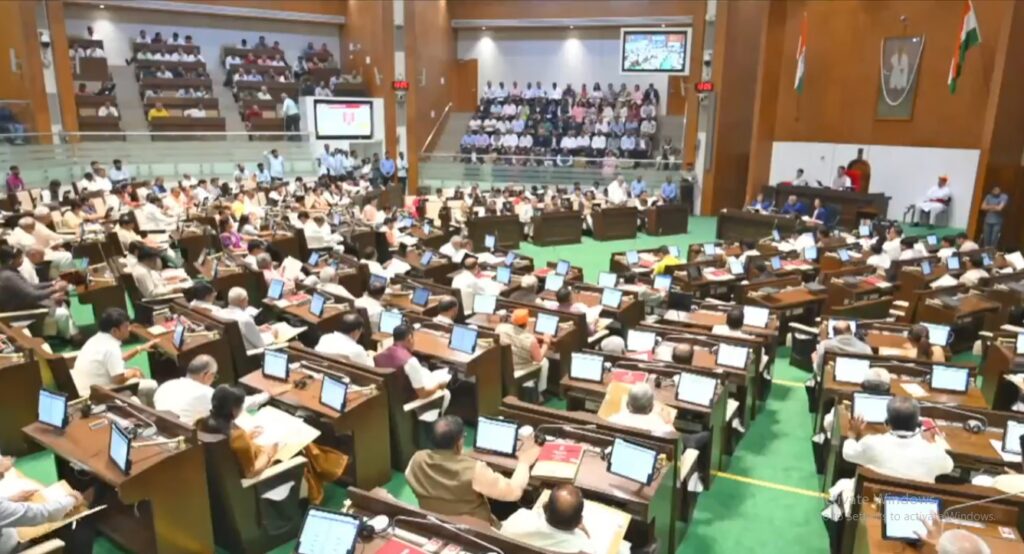
The total outlay of ₹4,08,053 crore marks a significant increase over the previous fiscal year’s allocation, reflecting Gujarat’s continued focus on development, welfare and infrastructure. This budget sets a new fiscal milestone for the state’s economy and governance.
- Major investments planned for infrastructure development across the state.
- Emphasis on building modern urban facilities and improving connectivity in satellite towns.
- Expanded allocations for housing schemes, aimed at providing affordable housing to low-income families.
- Increased provisions for social infrastructure and public welfare services.
- The Women and Child Development Department received a significant boost, with dedicated funds to improve health, nutrition and empowerment programmes.
- Total provision for the education department has been increased significantly, with plans to scale up educational infrastructure and quality of learning across the state.
- Allocations have been secured for key water supply and irrigation programmes, including boosting the reach of Narmada waters to drought-prone regions.
- Strong support for farmers and livestock sectors through increased provisions in this budget, aiming to enhance agricultural productivity and rural livelihoods.
According to analysts, this budget reflects the Gujarat government’s commitment to inclusive growth, with a focus on empowering women, youth, farmers and underserved communities while bolstering infrastructure projects and future-oriented sectors.
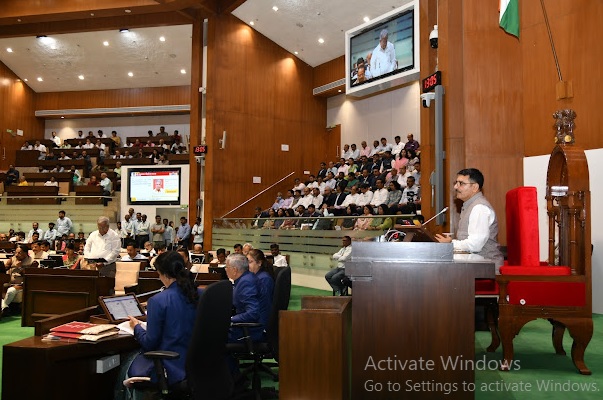
The budget maintains fiscal prudence while pushing for ambitious development goals, including preparations for major future events and comprehensive state projects.