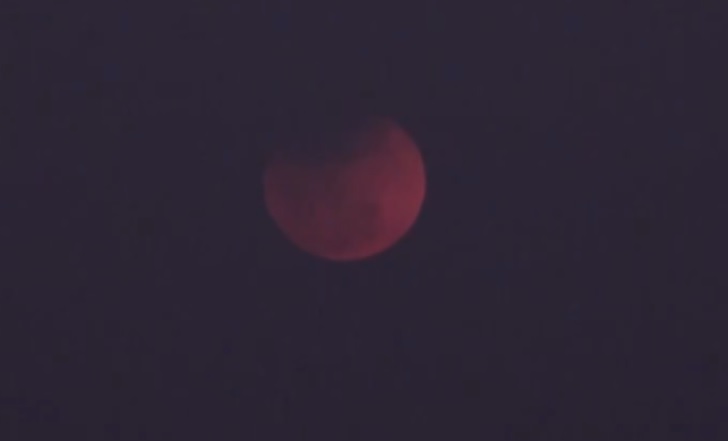
New Delhi, March 3, 2026: India witnessed the first total lunar eclipse of 2026 on Tuesday, providing skywatchers across the country a spectacular view of the “blood moon.” Astronomers reported that the eclipse began around 3:20 PM IST and concluded at 6:46 PM IST, with the peak totality occurring in the later evening.
The celestial event was visible across most parts of India, drawing the attention of enthusiasts and devotees alike. Experts noted that the lunar eclipse strengthens public interest in astronomy, while also highlighting the cultural significance of such events in India.
In line with tradition, many Hindu temples closed their gates during the eclipse, observing the period known as Sutak Kaal, considered inauspicious. In Delhi, prominent temples like Shri Kalka Ji and Shri Laxmi Narayan temporarily suspended activities, closing their doors in the morning hours before the eclipse began.
Similarly, temples in Tirupati, Bengaluru, and other regions followed the customary closure schedule. The Tirumala Tirupati Devasthanams (TTD) temples including the Sri Venkateswara Swamy Temple remained closed for roughly 10 hours, from around 9:00 AM to 7:30–8:30 PM, with special pujas and purification rituals performed before reopening to devotees.
Temple authorities explained that such closures ensure the sanctity of religious practices during celestial events. After the eclipse, temples conducted purification ceremonies, allowing devotees to resume darshan safely and in accordance with tradition.
While the lunar eclipse was a scientific spectacle, it also reinforced the rich cultural heritage of India, where eclipses are historically observed with rituals and reverence. Astronomers encouraged safe viewing practices, advising people to use proper filters or indirect methods to observe the event.
“This total lunar eclipse is not just an astronomical marvel, but also an opportunity to experience India’s unique blend of science and tradition,” said Dr. Ananya Mehta, an astrophysicist based in Mumbai.
As the “blood moon” faded into the night sky, devotees and enthusiasts alike celebrated a moment that bridges scientific achievement and cultural observance, marking yet another memorable event in India’s celestial calendar.