

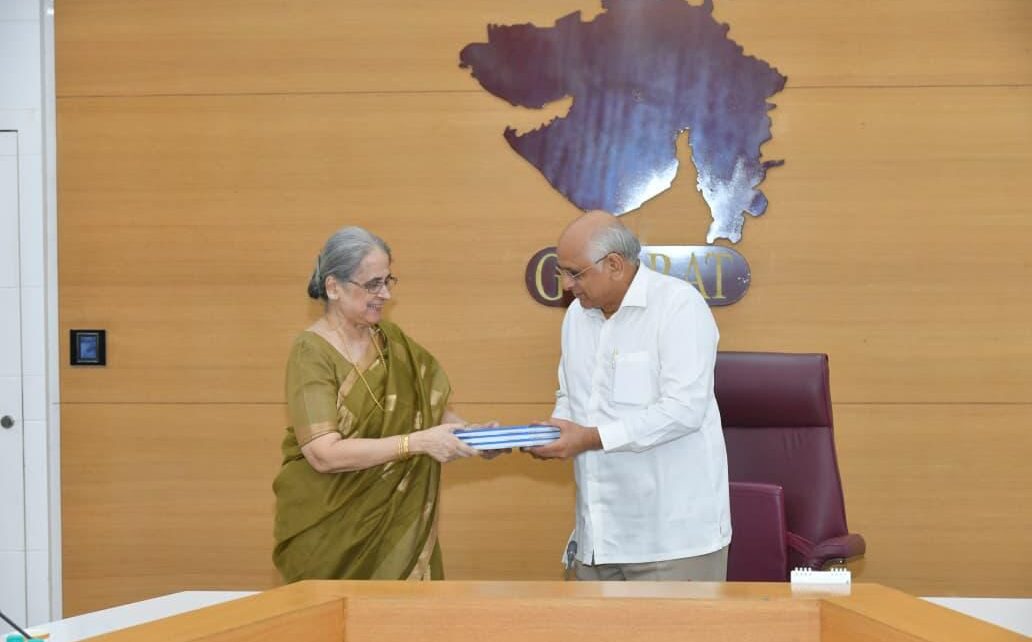
In a significant move, Bhupendra Patel has approved the draft framework of the Uniform Civil Code (UCC) in Gujarat, focusing on regulations related to marriage, divorce, inheritance, and live-in relationships.
The draft—prepared by a committee led by a retired Supreme Court judge—aims to bring uniform laws for all communities, ensuring equality and legal clarity in personal matters.
Key Highlights:
- Mandatory registration of marriages and live-in relationships
- Legal safeguards for women and children in live-in arrangements
- Uniform rules for divorce and inheritance across religions
- Focus on gender equality and transparency
The proposal is expected to be placed before the state cabinet and later in the Assembly for further discussion and approval.
The cornerstone of the marriage reform is found in Clause 4(1), which explicitly states that for a marriage to be valid, neither party should have a spouse living at the time of the marriage ceremony. This provision effectively mandates monogamy across all communities in Gujarat, regardless of prior personal laws or religious customs that may have permitted polygamy.
To ensure compliance, the Bill introduces significant legal consequences for violations:
- Criminal penalties: Any individual who marries while a spouse is still living will be subject to punishment under the Bharatiya Nyaya Sanhita, 2023.
- Void marriages: Any marriage performed in violation of the monogamy rule will be considered null and void under Clause 28.
- Protection for children: Despite the invalidity of a bigamous marriage, any child born from such a relationship will be considered legitimate under the law.
Beyond monogamy, the UCC 2026 standardises the essential requirements for entering into a valid marriage:
- Legal age: The minimum age for marriage is fixed at 21 years for men and 18 years for women.
- Mental capacity: Both parties must have the mental capacity to give valid consent. A marriage can be challenged if a party is suffering from a mental disorder that makes them unfit for marriage or subject to recurrent attacks of insanity.
- Prohibited relationships: Marriages within the degrees of prohibited relationship are not allowed unless specifically permitted by the customs and usages governing at least one of the parties.
The Code prohibits marriages between individuals falling within the degrees of prohibited relationship, as defined in Schedule 1, including:
- For a man: He cannot marry his mother, step-mother, grandmother, daughter, son’s widow, granddaughter, sister, niece, or paternal or maternal aunts.
- For a woman: She cannot marry her father, step-father, grandfather, son, daughter’s husband, grandson, brother, nephew, or paternal or maternal uncles.
Exception: Such marriages may be permitted only if the customs and usages governing at least one of the parties specifically allow them.
These restrictions apply whether the relationship is by full blood, half-blood, uterine blood, adoption, surrogacy, or assisted reproductive technology, and whether legitimate or illegitimate. The prohibitions extend to several generations of linear descendants and relatives, though an exception is allowed for marriages permitted by long-standing customs, provided such customs are not against public policy or morality.
This step aligns with the broader national debate on implementing the UCC, an idea strongly supported by Narendra Modi.


