

The alternatives developed by the National Institute of Design (NID), Ahmedabad, include moulded containers made from sugarcane bagasse, a by-product of sugarcane processing, as well as reusable tin boxes. The initiative could prevent around 135.6 tonnes of packaging-related plastic waste annually at Ambaji, where approximately 10 lakh prasad boxes are distributed every month Gandhinagar:
Following the successful introduction of eco-friendly prasad packaging at Shri Somnath Temple, the Gujarat Pollution Control Board (GPCB) plans to replicate the model at Shri Arasuri Ambaji Mata Temple to reduce single-use plastic waste at one of Gujarat’s prominent pilgrimage centres.
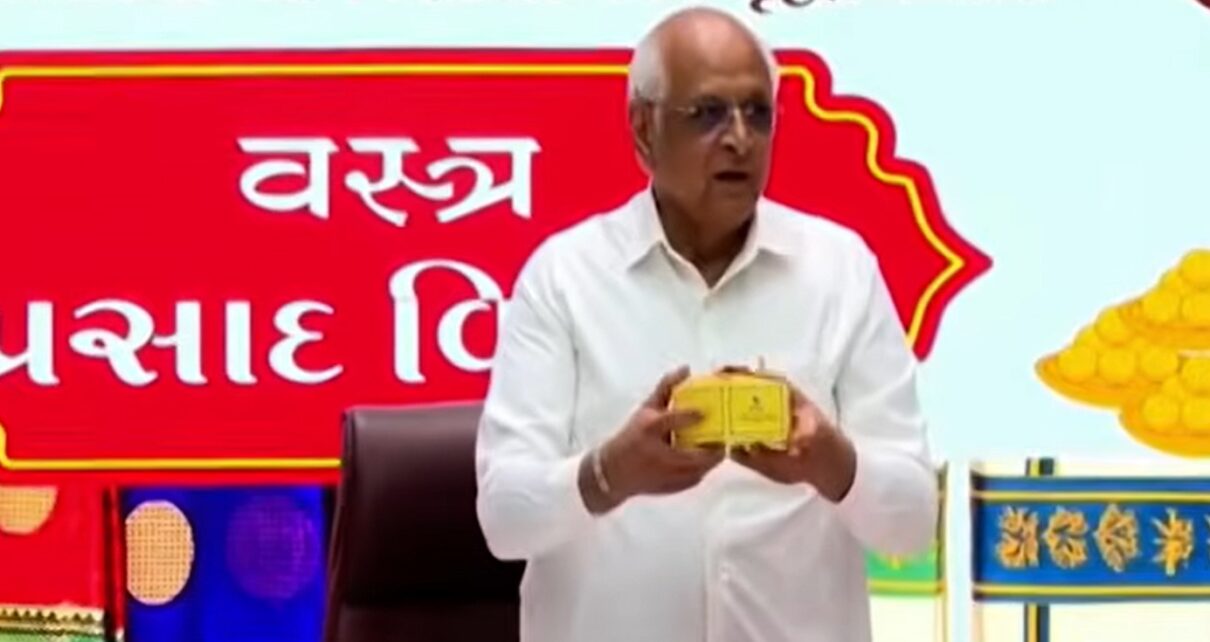
The alternatives designed by the National Institute of Design (NID), Ahmedabad, include moulded sugarcane bagasse containers made from sugarcane waste and reusable tin boxes. The initiative aims to promote sustainable pilgrimage management by replacing conventional plastic prasad containers with environmentally friendly alternatives while preserving the cultural and spiritual significance of the tradition. The initiative reflects Prime Minister Shri Narendra Modi’s vision of promoting environmentally conscious lifestyles, responsible consumption and circular economy practices through public participation. It also aligns with Chief Minister Shri Bhupendra Patel’s commitment to translating this vision into tangible environmental action across Gujarat. At Shri Somnath Temple, prasad is now distributed in plastic-free paper boxes and reusable tin containers. The newly developed eco-friendly packaging was formally inaugurated by Chief Minister Shri Bhupendra Patel on September 17, 2026.
Somnath Temple distributes approximately 4,200 kilograms of prasad in nearly 27,700 boxes every day. The transition from conventional plastic containers to sustainable alternatives is expected to eliminate more than 203 tonnes of plastic use annually, marking a significant step towards reducing the environmental footprint of pilgrimage activities. Ambaji to Adopt the Somnath Model Building on the experience at Somnath, GPCB plans to introduce similar packaging solutions at Shri Arasuri Ambaji Mata Temple. “The temple currently uses approximately 15,000 plastic prasad boxes on a normal day, with demand rising considerably during festivals and special occasions. Around 10 lakh boxes are distributed every month, generating an estimated 11,299.5 kilograms of packaging-related plastic waste,” said Shri Arjun Modhwadia, Minister for Forests and Environment. “The proposed transition to eco-friendly alternatives could prevent approximately 135.6 tonnes of plastic waste annually at Ambaji.
The packaging solutions are intended to maintain the hygiene, functionality and convenience required for prasad distribution while preserving its cultural identity,” Shri Arjun Modhwadia added. Recognising the potential of religious institutions to influence public behaviour, GPCB explored ways to integrate environmental responsibility into the traditional practice of offering and carrying prasad. The initiative seeks to replace conventional plastic containers with packaging that is environmentally responsible, culturally appropriate and practical for temple operations. NID Develops Eco-Friendly Packaging Solutions To develop suitable alternatives, GPCB engaged the Integrated Design Services of the National Institute of Design (NID), Ahmedabad, through a professional design consultancy assignment. Field studies were conducted at Shri Somnath Temple and Shri Arasuri Ambaji Mata Temple to assess devotee footfall, prasad quantities, preparation and packaging processes, storage conditions, distribution patterns and existing waste-generation practices.
The study found that a single packaging solution would not meet all requirements. While prasad intended for immediate consumption required lightweight, biodegradable packaging, products carried home or transported over longer distances needed stronger and more durable containers. Accordingly, separate solutions were explored for immediate consumption, regular takeaway and reusable packaging. Different packaging options for Devotees The resulting alternatives included plastic-free paper boxes, moulded sugarcane bagasse containers and reusable tin boxes. Paper and bagasse packaging were designed for environmentally responsible disposal after short-term use, while tin boxes were conceived as durable containers that devotees could retain and reuse. “Beyond replacing conventional packaging, the initiative seeks to make environmental responsibility an integral part of religious practice. By introducing biodegradable and reusable alternatives at prominent pilgrimage centres, GPCB aims to demonstrate how thoughtful design, institutional action and public participation can deliver measurable environmental benefits,” said Pravin Mali, Minister of State for Forests and Environment.
With the model implemented at Somnath and plans being developed for Ambaji, the initiative could serve as a model for replication at other pilgrimage centres across Gujarat and beyond. It also seeks to encourage devotees to adopt more sustainable practices, demonstrating how religious traditions can contribute to environmental conservation.


