

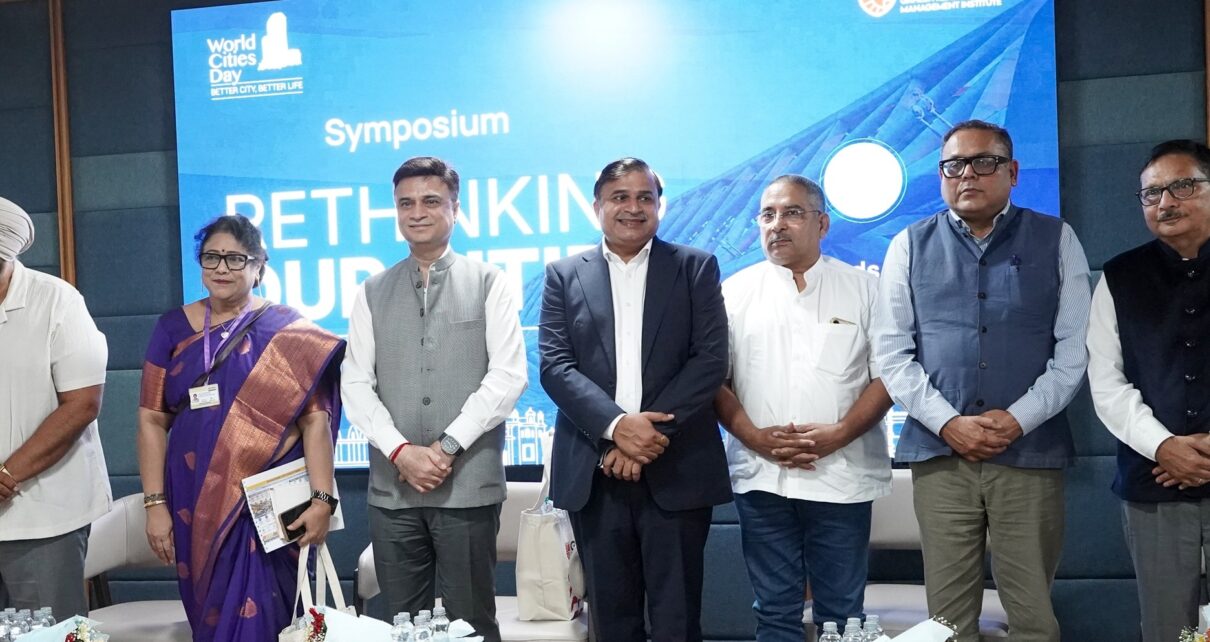
As India prepares to lead the next global wave of urbanisation by 2050, planners, policymakers, academics and industry leaders meet in Ahmedabad to rethink urban regeneration, housing and the use of existing urban assets
AHMEDABAD, 30 October 2026 — India’s cities must grow better, not just bigger, as the country prepares to lead the next global wave of urbanisation, experts said at a symposium organised by GREMI (Ganesh Real Estate Management Institute) in Ahmedabad on Friday to mark World Cities Day.
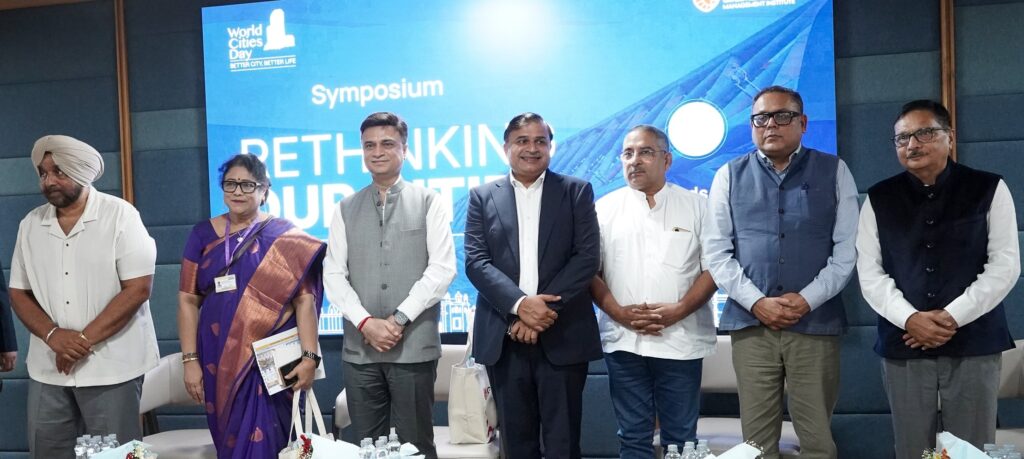
Titled “Rethinking Our Cities: Urban Regeneration, Adequate Housing and Better Use of Existing Urban Assets”, the symposium brought together academics, policymakers and industry leaders to discuss how Indian cities can expand without losing sight of the three things that matter most to citizens: affordability, inclusivity and livability.
Setting the tone with a thematic presentation titled “Cities at a Crossroads”, Dr Anil Kashyap, Director General, GREMI, said India’s emergence as the leader of the next global urban wave by 2050 places critical choices before planners, governments and developers. “With nearly 45 per cent of the world’s population already living in cities, the focus must shift from simply expanding our cities to improving the quality, sustainability and inclusiveness of the urban environments we already have,” he said.
The panel discussion that followed was moderated by Dr Amarjit Singh, IAS (Retd.), Former Chairman, RERA Gujarat, and Adjunct Professor, GREMI. It featured Dr Rekha Chandran Jetty, Director, Institute of Architecture and Planning, Nirma University; Prof. Saswat Bandyopadhyay, Faculty of Planning, CEPT University; Mr P. L. Sharma, Former Chief Town Planner, Government of Gujarat; and Mr Rajesh Vaswani, Founder, Venus Group, and Chairman, CREDAI Ahmedabad.
Housing affordability dominated the discussion. Panellists said homes are moving out of reach as property prices outpace incomes, pointing out that the global house price-to-income ratio has risen from 9.4 years in 2010 to 11.7 years today. They warned that poorly planned redevelopment can displace existing communities, replacing familiar neighbourhoods with costly housing that original residents can neither afford nor relate to. Instead, they called for entire areas, rather than isolated housing societies, to be redeveloped with the active participation of the people who live there.
Livability, speakers said, goes well beyond good buildings. A livable city needs walkable streets, accessible public spaces, and clean air and water, yet health and environmental costs are routinely left out when projects are planned. Underlining the need for evidence-based planning, the panel observed that “pictures tell stories, but numbers rewrite them.”
On finance and governance, speakers noted that Indian cities remain severely underfinanced and urged civic bodies to raise more of their own revenue, including through land value capture. Cities, they said, need long-term visions, investment plans and dedicated funding for urban regeneration, not a string of one-off projects. Town Planning schemes and development control regulations should become enabling and performance-based, focusing on outcomes and quality rather than rigid rules, with GIFT City cited as an example of performance-based regulation in practice.
The panel also identified agencies working in silos, limited stakeholder involvement and weak accountability as key factors holding cities back. It called on government, academia and the private sector to build trust and work together, and for proper forums where citizens’ voices can be heard.
The symposium concluded that building a city is a long-term, collective task that demands accountable leadership, stronger public-private partnerships and integrated planning. The goal, speakers agreed, must be cities that are affordable, livable and resilient, and that improve life for everyone who lives in them.


