

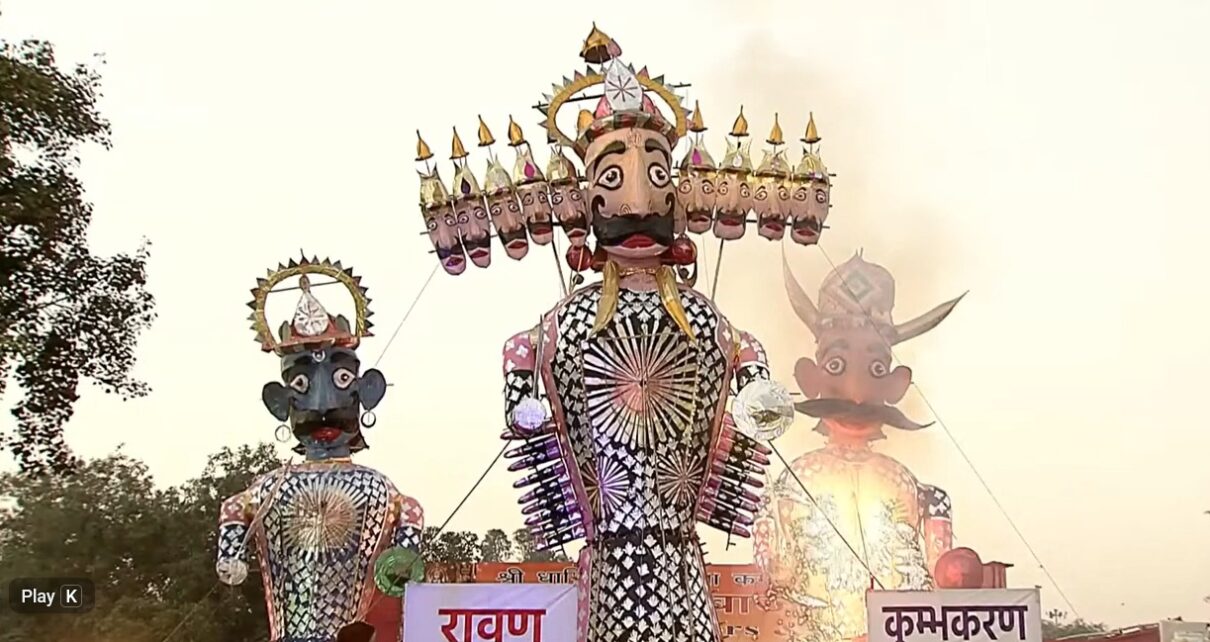
New Delhi: Dussehra, also known as Vijayadashami, is celebrated across India with immense enthusiasm, devotion and traditional fervour. The festival symbolises the victory of good over evil, truth over falsehood and righteousness over injustice. People in different parts of the country celebrate this auspicious occasion according to their regional customs, cultural traditions and religious beliefs.
One of the major attractions of Dussehra is the ceremonial burning of the effigies of Ravana, Kumbhakarna and Meghnad at numerous locations. These events draw large crowds and are often accompanied by colourful fairs, dramatic performances of the Ramayana, cultural programmes and fireworks. Families and communities come together to share the festive spirit and exchange greetings.
Diverse Dussehra Traditions Across India
In northern India, Ramlila performances depicting episodes from the life of Lord Rama are an integral part of the celebrations. The festival culminates in the symbolic burning of Ravana’s effigy, representing the triumph of virtue over arrogance and wrongdoing.
In Gujarat, Dussehra follows nine nights of vibrant Navratri celebrations, when people participate in traditional Garba and Dandiya Raas. Vijayadashami is also considered an auspicious occasion for religious ceremonies and the worship of weapons, tools and vehicles in many communities.
In West Bengal, Vijayadashami marks the concluding phase of the grand Durga Puja celebrations. Devotees bid farewell to Goddess Durga through traditional rituals and idol immersion ceremonies.
Mysuru in Karnataka is renowned for its spectacular Dasara celebrations, featuring grand processions, decorated elephants and cultural performances. In several southern Indian communities, Vijayadashami is also regarded as an auspicious day to begin education, learn new skills and undertake important activities.
These regional variations reflect India’s rich cultural heritage and the diversity of its traditions.
A Festival That Inspires Positive Change
Beyond its religious significance, Dussehra carries a timeless message for society. It encourages people to overcome negative qualities such as arrogance, greed, hatred and dishonesty while embracing truth, compassion, humility and justice.
The symbolic defeat of Ravana serves as a reminder that power and knowledge must be guided by wisdom and good character. The festival also offers an opportunity to strengthen family bonds, promote social harmony and encourage mutual respect among people from different backgrounds.
As communities across India celebrate Vijayadashami, the festival renews the hope that truth and righteousness will ultimately prevail. Its enduring message continues to inspire people to lead responsible lives, uphold moral values and contribute towards a peaceful and harmonious society.
Dussehra is not merely a festival of celebration; it is a reminder that the victory of good begins with the choices people make in their everyday lives.


