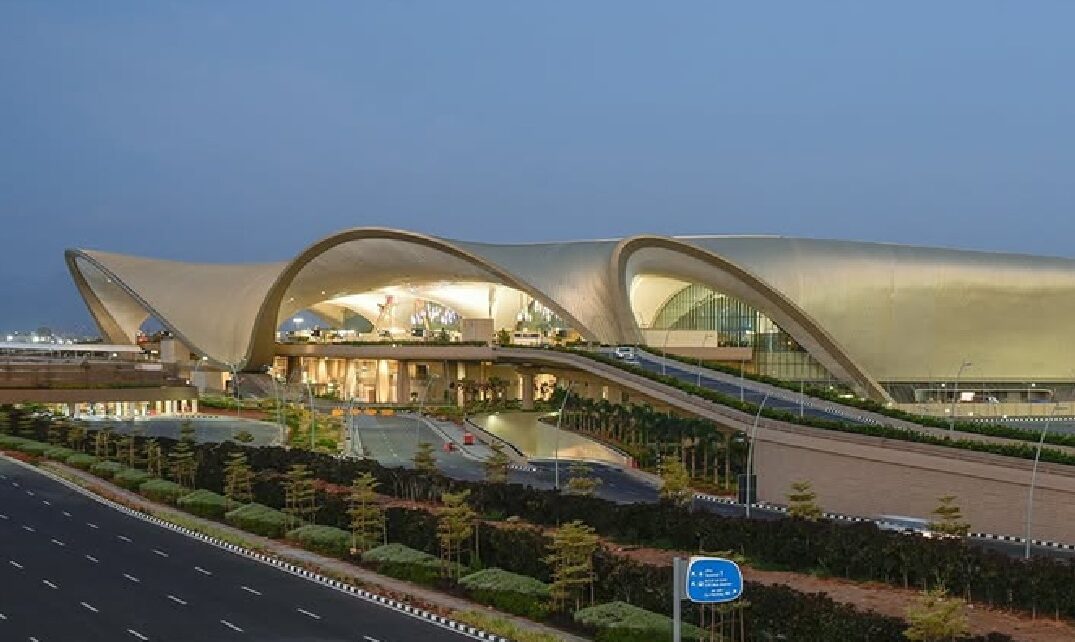
1. Growing confidence in infrastructure readiness: IndiGo and Air India agreeing to shift a part of their operations to the newly built Navi Mumbai International Airport reflects growing confidence among leading domestic carriers in its infrastructure and operational readiness. This milestone follows nearly 18 months of extensive consultations between the airport operator and airlines to facilitate a coordinated and phased transition to replace ageing Terminal 1, CSMIA with modern aviation infrastructure. In addition to the existing road network, three new bridges—SBR-9, BR-4 and BR-5—built by CIDCO across Panvel Creek and the Gadhi River, are set to improve connectivity between Navi Mumbai International Airport (NMIA), Atal Setu, Ulwe Coastal Road, Amra Marg and NH-4B.
2. Enabling the redevelopment and modernisation of CSMIA Terminal 1: The planned transfer of around 3 million passengers—accounting for approximately 60% of the traffic targeted for relocation in the first phase—will create the necessary headroom for the phased redevelopment of CSMIA’s Terminal 1. The initial phase aims to shift approximately 5 million passengers to Navi Mumbai, enabling critical safety enhancements, modernisation, upgraded passenger facilities and expanded handling capacity at CSMIA.
3. Building a safer, modern and future-ready aviation ecosystem for Mumbai: Distributing traffic between CSMIA and Navi Mumbai will help ease capacity constraints, facilitate planned infrastructure upgrades and improve operational efficiency across Mumbai’s aviation network. The redevelopment of CSMIA’s Terminal 1 will create a safer, modernised and digitally enabled facility, increasing its annual passenger-handling capacity by approximately 33%—from 15 million to 20 million. This additional capacity will enhance the passenger experience, provide airlines with greater scope for growth and support Mumbai’s long-term economic development and international connectivity. Importantly, the redevelopment will also preserve the city’s aviation legacy while preparing its infrastructure to meet the needs of the future.
4. Advancing India’s ambition to become a global aviation hub: The development of Navi Mumbai alongside CSMIA offers Mumbai the opportunity to evolve into a dual-airport gateway, with greater capacity, wider international connectivity and stronger potential to attract international transfer traffic. *Together, the two airports can facilitate more seamless domestic–international connections, attract greater participation from international airlines and enable India to capture a larger share of global transit traffic.* This would strengthen India’s position in the global aviation network and support its ambition to emerge as an international aviation hub.
5. Creating a pathway for wider international airline participation: The participation of major domestic carriers establishes an important foundation for Navi Mumbai’s operational growth and network expansion. As connectivity increases and the airport builds its operational track record, it could encourage more international airlines to launch or expand services, broadening passenger choice and strengthening Mumbai’s global connectivity. This, in turn, can help unlock the full potential of the city’s dual-airport ecosystem.
NMI: Key Strengths for International Passenger Operations
Navi Mumbai International Airport (NMIA) combines world-class, future-ready infrastructure with scalable capacity, with Terminal 1 designed to handle 20 million passengers annually and future expansion planned to reach 90 million. NMIA’s connectivity to key urban centres, business districts and logistics hubs across the Mumbai Metropolitan Region, supported by road infrastructure and planned multimodal transport links, will improve accessibility for passengers and airline staff. Advanced passenger-processing systems, Digi Yatra, automated baggage handling and integrated digital platforms will support seamless journeys and efficient airline operations. Dedicated cargo facilities, specialised cold-chain infrastructure, inflight catering and proximity to major ports and industrial hubs strengthen its global logistics potential. Modern hospitality, diverse retail and dining, passenger lounges and distinctive Indian cultural experiences enhance traveller appeal. Sustainable design and phased expansion position NMIA to strengthen Mumbai’s international connectivity and India’s global aviation ambitions.*
Why Redevelopment of CSMIA Terminal 1 Is Essential
The redevelopment of CSMIA’s Terminal 1 is essential to address safety concerns reportedly raised by experts and create a safer, more resilient terminal. It will increase annual passenger-handling capacity by 33%, from 15 million to 20 million, enabling Mumbai to accommodate growing air traffic. The project will also integrate next-generation passenger facilities, advanced digital systems and smarter processing infrastructure aligned with evolving global aviation standards. Temporarily shifting selected operations to Navi Mumbai International Airport will create the necessary headroom for redevelopment while allowing airlines to retain their historical CSMIA slots, which the airport operator has said will be restored after completion. The modernised terminal will enhance passenger experience, support airline growth and strengthen Mumbai’s long-term aviation capacity and international connectivity, while preserving the city’s distinctive local heritage, architectural character and rich aviation legacy for future generations.
It is worth mentioning that only 9% of CSMIA’s annual 55 million passenger traffic will be temporarily transitioned as part of redevelopment programme for Terminal 1. Around 91% of the traffic will continue to operate from Mumbai Airport.