Gujarat will install more data centre capacity over the next two to three years than the rest of India combined: Harsh Sanghavi Dy CM
Gujarat to announce new policies for concerts, expos, and hotels soon
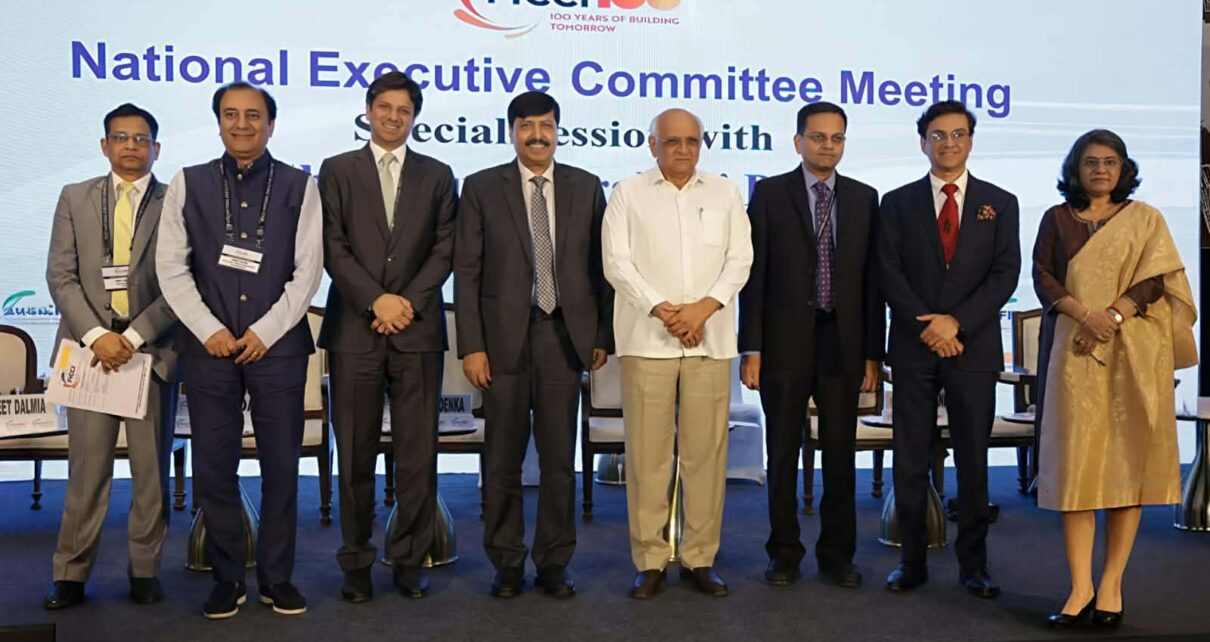
Ahmedabad, 21 April 2026: More than 100 ‘Fortune 500’ companies currently operate in the state, underscoring Gujarat’s standing as a preferred destination for global capital. Addressing FICCI’s National Executive Committee Meeting, Gujarat Chief Minister Mr Bhupendrabhai Patel shared the ambitious industrial roadmap for the state, aiming to grow its economy to USD 3.5 trillion by 2047.
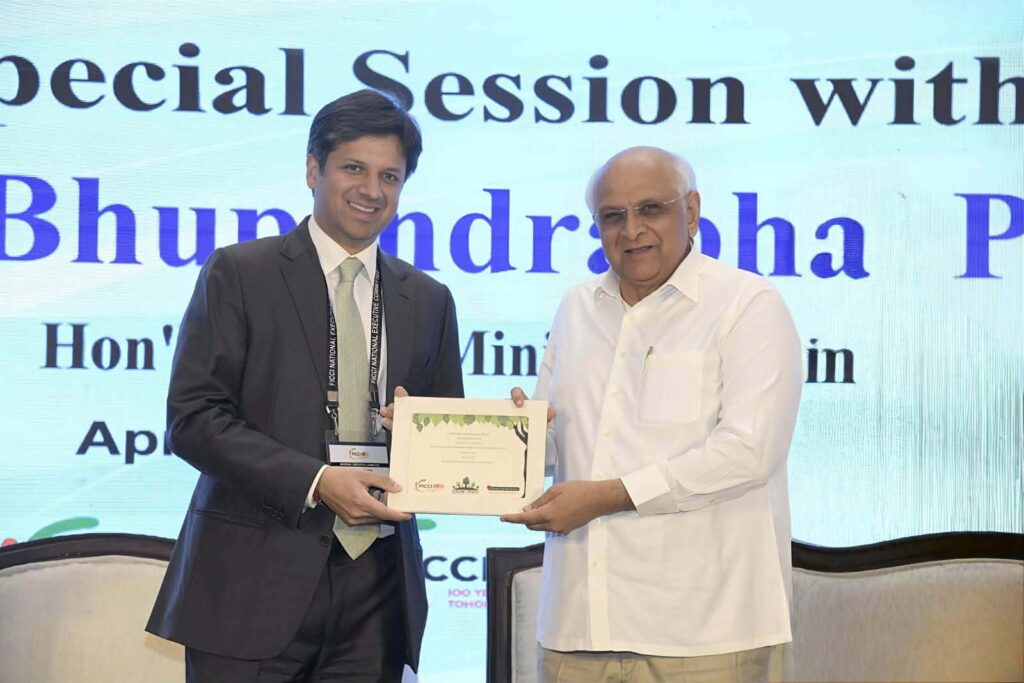
Honourable Chief Minister Mr Bhupendrabhai Patel alluded to two semiconductor fabrication plants, inaugurated under the Prime Minister’s guidance, as evidence of Gujarat’s emergence as a node in the global semiconductor supply chain, with GIFT City now hosting an AI Centre of Excellence, Data Centres, and fintech infrastructure.
The Chief Minister also outlined a suite of enabling policies, covering semiconductors, green hydrogen, IT and ITeS, and Global Capability Centres, as the institutional framework underpinning the state’s ambitions. He reaffirmed Gujarat’s commitment to carbon neutrality by 2050 and highlighted women-led development as a structural priority, pointing to strong female participation in start-ups under the Mudra Yojana as a marker of inclusive growth. “Viksit Bharat means ‘Viksit Gujarat’ and FICCI will always be an active partner in this journey,” he said, framing the state’s trajectory as inseparable from India’s broader aspiration of becoming a developed economy by 2047.
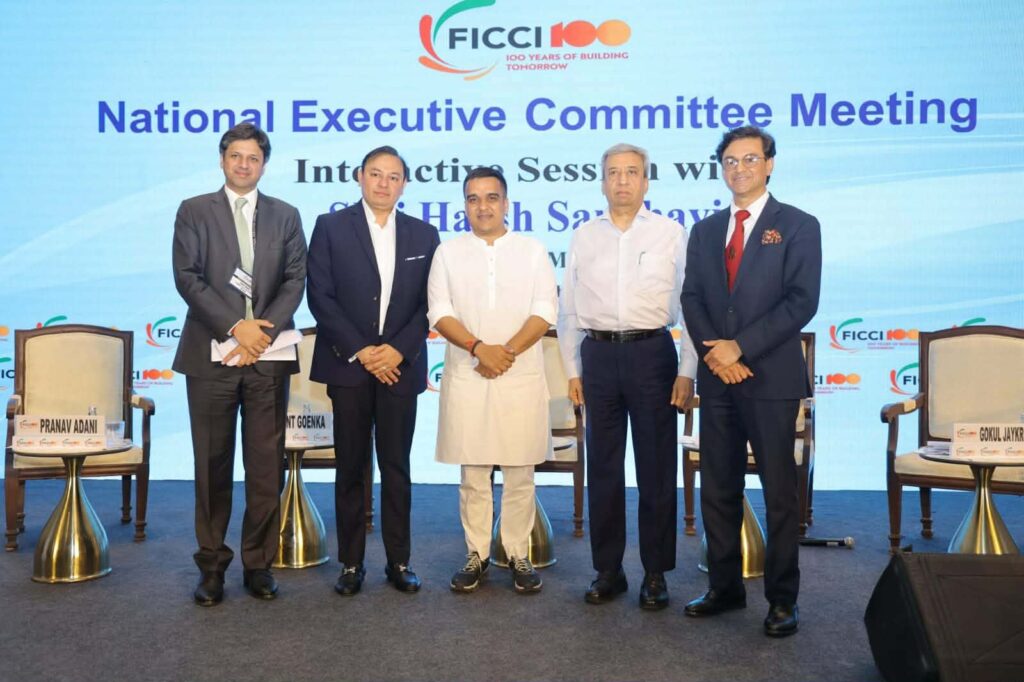
Addressing the Industry Interactive Session at the Le Meridien in Ahmedabad, Gujarat’s Dy. Chief Minister Mr Harsh Sanghavi identified data centres, semiconductors, Global Capability Centres, defence, and aircraft manufacturing as the sunrise sectors anchoring Gujarat’s next phase of industrial expansion. On data infrastructure, Mr Sanghavi asserted that Gujarat will install more data centre capacity over the next two to three years than the rest of India combined. On semiconductors, the deputy chief minister confirmed that Asia’s largest fabrication plant is coming up in Dholera, a 920-square-kilometre greenfield industrial zone, while a large assembly, test, marking, and packaging ecosystem is taking shape at Sanand. Industrial infrastructure of comparable scale, he added, is also ready across Becharaji, Vadodara, and South Gujarat, ensuring that no single corridor becomes a bottleneck. Deputy Chief Minister Mr Harsh Sanghavi outlined a vision for Ahmedabad that extended well beyond industrial estates. New concert venues are being constructed near Narendra Modi Stadium, with capacities ranging from 15,000 to 1.25 lakh designed to make the city a destination for large-scale entertainment events.
Hotel plots are being allocated in the stadium precinct to catalyse hospitality investment, and new policies for concerts, expos, and hotels are expected within days. FICCI President Mr Anant Goenka reinforced the statistical case for Gujarat’s leadership, underscoring the state’s outsized economic contribution. Despite accounting for roughly 5 per cent of India’s population, Gujarat generates over 8 per cent of national GDP, contributes more than 30 per cent of merchandise exports, and handles 40 per cent of the country’s cargo throughput. Over the past decade, the state’s nominal gross state domestic product has expanded at an annualised rate exceeding 10 per cent. “Gujarat’s performance continues to inspire,” Mr Goenka said. “The scale of industrial ambition from semiconductor fabrication units in Dholera and Sanand to the C295 aircraft manufacturing plant in Vadodara is positioning Gujarat as a hub for high-value manufacturing.” Mr Gokul Jaykrishna, Chair of the FICCI Gujarat State Council and Managing Director and CEO of Asahi Songwon Colours, struck a collaborative note in his opening remarks. “Gujarat has consistently translated vision into action, setting benchmarks for the rest of the nation,” he said, adding that the state’s launchpad of enterprise and infrastructure offered particular promise to MSMEs and young entrepreneurs. As part of its centenary agenda, FICCI identified four priority pillars for the coming phase: manufacturing excellence, research and development, ease of doing business, and trade and supply chain security.
He signalled FICCI’s intent to deepen its collaboration with Gujarat on MSME competitiveness, particularly through greater awareness of free trade agreement opportunities, as well as ESG and investment promotion through continued engagement with the Vibrant Gujarat Summit. Mr Vijay Sankar, Senior Vice President, FICCI and Chairman of The Sanmar Group, delivered the vote of thanks.