In a significant move ahead of the Gujarat Government’s cabinet meeting, most ministers were seen arriving through carpooling arrangements and electric vehicles (EVs), reflecting a strong push toward fuel conservation and sustainable governance in line with Prime Minister Narendra Modi’s appeal for environmental responsibility.
Chief Minister Bhupendra Patel also kept his official convoy minimal, arriving with only two vehicles in his government fleet, signaling the administration’s intent to reduce unnecessary fuel consumption and official expenditure.
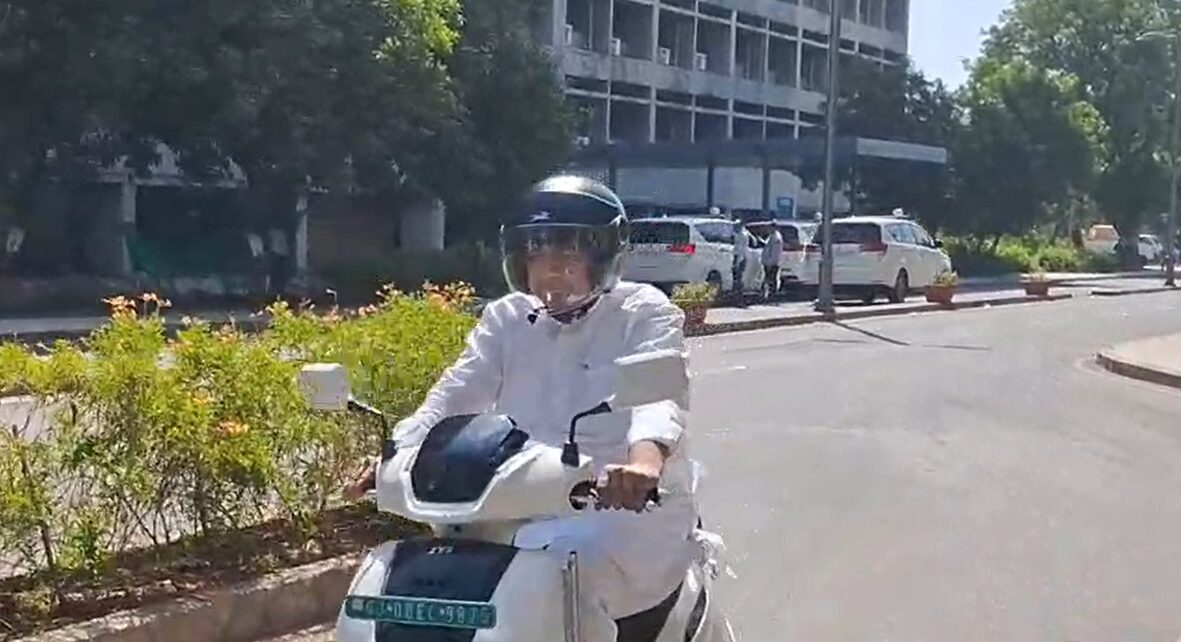
State Environment Minister Pravin Mali arrived at the cabinet meeting on his electric two-wheeler. Speaking to the media, he said that after the Prime Minister’s appeal, he personally decided to increase the use of EV vehicles by 50 percent in his daily routine to help conserve fuel and support environmental protection efforts. He also confirmed that discussions regarding wider adoption of EV vehicles for ministers and government use would take place during the cabinet meeting.
Meanwhile, Deputy Chief Minister Harsh Sanghavi was seen carpooling with fellow ministers. He stated that the government has already issued several directions aimed at reducing fuel consumption and that a detailed discussion on the issue would be held during the cabinet session.
Harsh Sanghavi also thanked the public for responding positively to the Prime Minister’s appeal by increasingly using public transport. He added that in the coming days, ministers may participate in several government programs through virtual platforms to further reduce fuel expenses and travel-related costs.
According to government sources, several ministers have already begun adopting carpooling practices and shifting toward EV usage. After discussions on various agenda items in the cabinet meeting, the Gujarat Government is expected to announce some important decisions related to fuel conservation, green mobility, and reducing government expenditure.